Subin Lin
About Me
I connect experiments, CFD, and AI to understand environmental systems.
Urban fluid mechanics. I am a PhD candidate in the Department of the Built Environment at the National University of Singapore (NUS). My current research examines how building design shapes urban ventilation, aerodynamic exchange, and pedestrian-level wind conditions. I combine an independently conducted wind-tunnel campaign with validated RANS/LES simulations and design-oriented flow analysis.
Environmental AI. Before beginning my PhD, I studied drinking-water treatment using long-term operational data. I coded graph-attention and recurrent neural-network models in Python and PyTorch to forecast coagulant dosage and treated-water turbidity. This research produced first-author articles in Water Research and the Journal of Water Process Engineering.
Field sensing and reusable data. I also contributed to a district-scale thermal-imaging campaign in Singapore, working with Infrared measurements, data-quality assessment, and Python processing workflows. The resulting reusable urban surface-temperature dataset was published in Scientific Data.
I am currently seeking postdoctoral, research scientist, and R&D engineering opportunities. I am particularly interested in urban and environmental CFD, experimental fluid mechanics, physics-informed AI, and data-driven methods that accelerate or improve the reliability of CFD.
Academic Journey
Before NUS, I completed an MSc by Research in Civil and Environmental Engineering at KAIST in South Korea and a BSc in Civil and Environmental Engineering at the Technion - Israel Institute of Technology. I have also worked as a Senior Research Engineer at the Berkeley Education Alliance for Research in Singapore.
Civil & environmental engineering
Water, data, and machine learning
Wind tunnels, CFD, and urban air
Research Interests
- Urban ventilation and building porosity - how openings, geometry, and density affect air exchange in street canyons.
- Experiments and validated CFD - wind-tunnel and wet-lab experience connected to RANS and LES workflows for robust, design-ready evidence.
- Physics-informed AI - graph neural networks, time-series learning, surrogate models, and LLM-assisted research workflows.
- Data-rich environmental systems - AI-enabled building-energy forecasting and water-treatment process prediction.
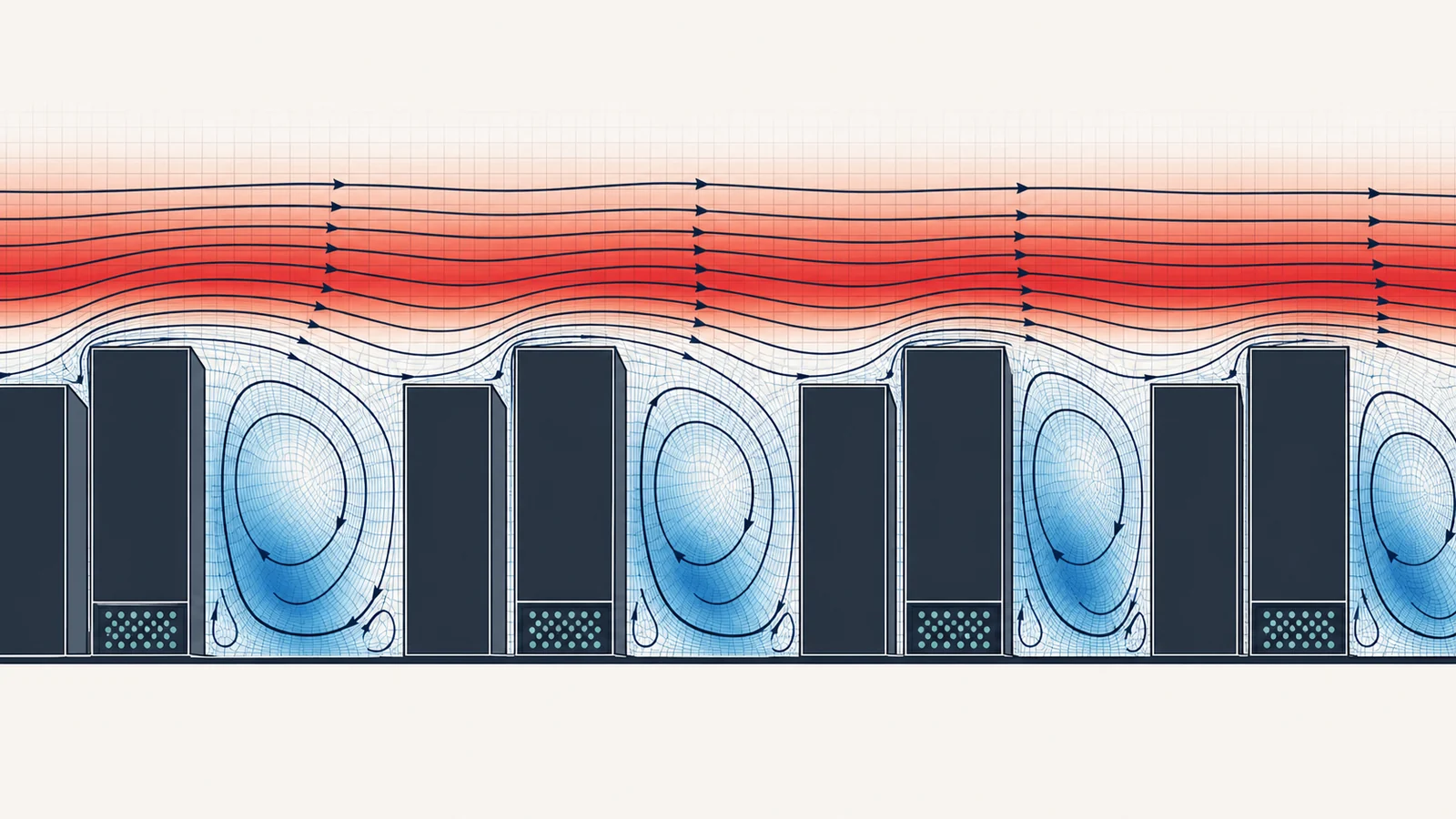
Ventilation, building porosity, and street-canyon flow.
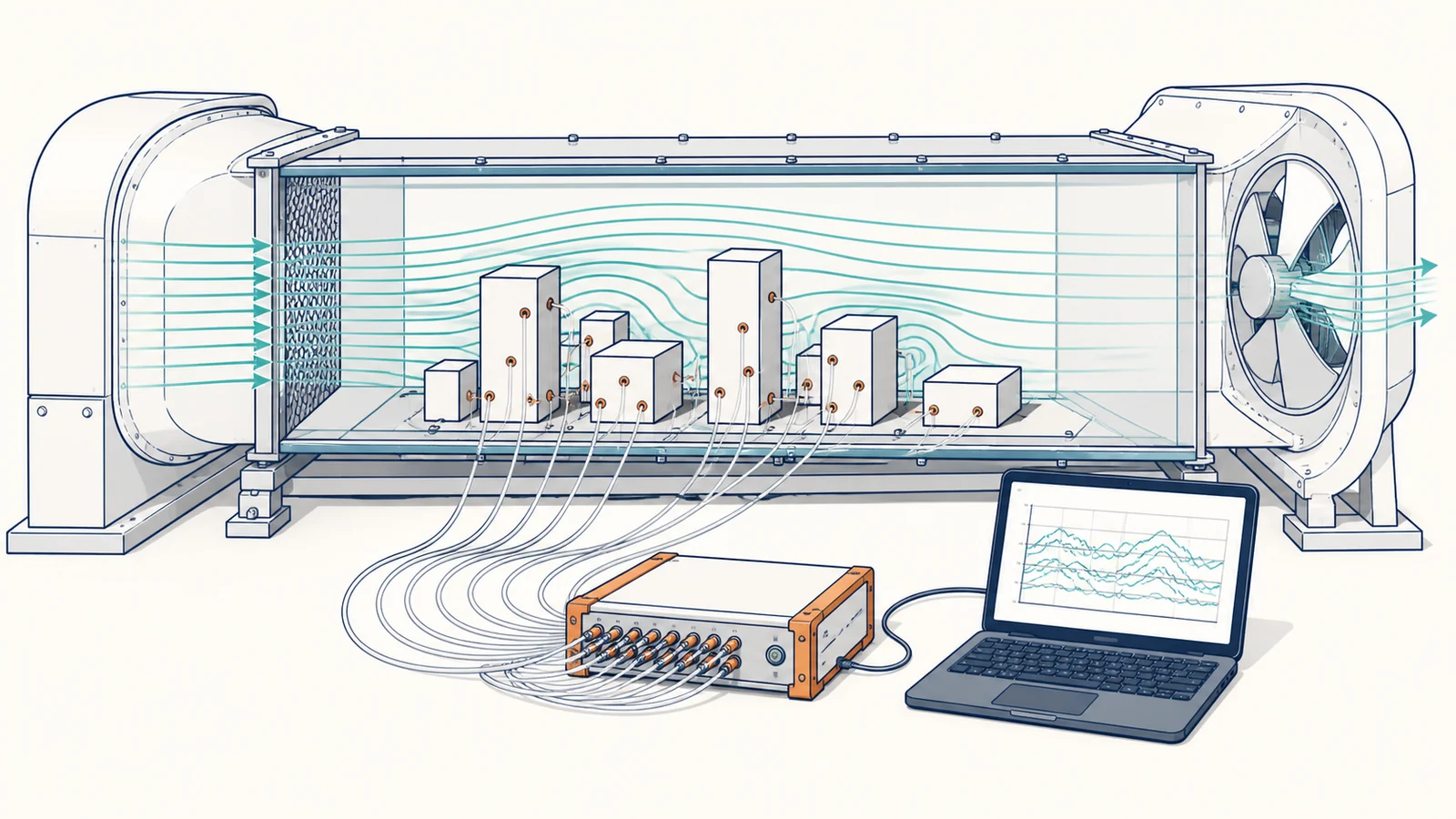
Wind-tunnel measurements, water-treatment wet-lab work, and model validation.
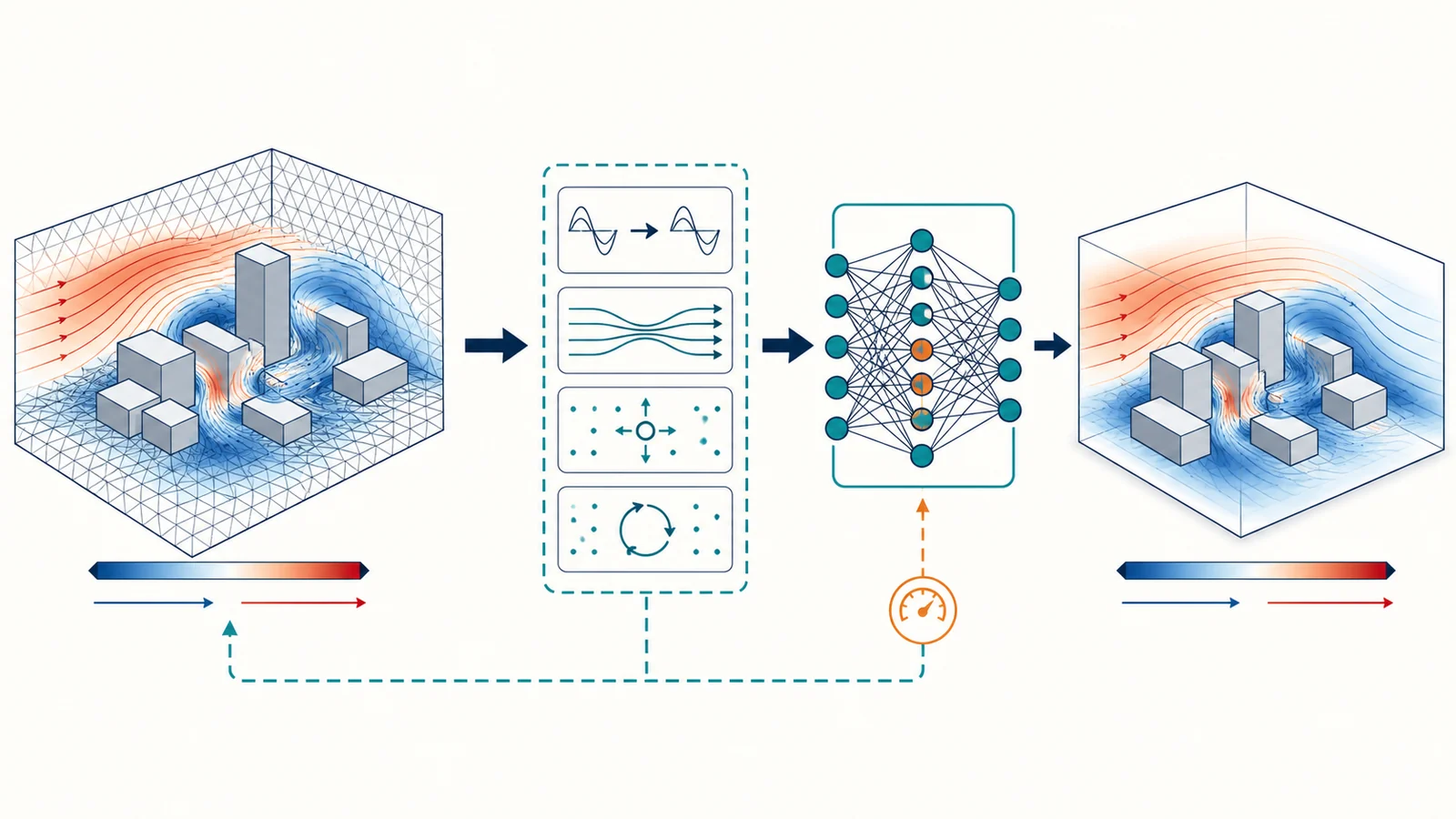
Surrogate models, graph learning, and scientific automation.
Curious, adaptive, and self-directed
I enjoy moving between water-treatment wet-lab experiments, long-term operational data, wind-tunnel measurements, RANS/LES simulations, and AI models.
I have moved from civil and environmental engineering into ML, deep learning, programming, probability, CFD, and now LLMs - always taking time to build the fundamentals.
I funded my international education through full scholarships across my BSc, MSc, and PhD, and I am comfortable taking ownership of difficult problems from start to finish.
Life in Israel, South Korea, and Singapore taught me to adapt across cultures and languages - from the Technion preparatory programme in Hebrew to learning Korean in Daejeon.
Explore my academic journey and publications.
news
| 15-18 Jun 2026 | Presented Validation of RANS and LES Against Wind Tunnel Measurements for Urban Street Canyon Aerodynamics at Indoor Air 2026 in Singapore. |
|---|---|
| 18-22 May 2026 | Presented Aerodynamic response and ventilation enhancement in urban street canyons through building porosity at IAQVEC 2026 in Los Angeles and received the IAQVEC Fellowship. |
| Apr 2026 | Published Design trade-offs in building porosity: A parametric analysis of vertical placement and geometry for urban ventilation in the Journal of Wind Engineering and Industrial Aerodynamics. |
| 30 Sep 2025 | Physics-Informed Large Language Models for HVAC Anomaly Detection with Autonomous Rule Generation was selected as an oral contribution at the NeurIPS 2025 UrbanAI Workshop. |
| 6-10 Jul 2025 | Attended COBEE 2025 - the 6th International Conference on Building Energy and Environment - in Eindhoven, the Netherlands. |
selected publications
- JWEIA
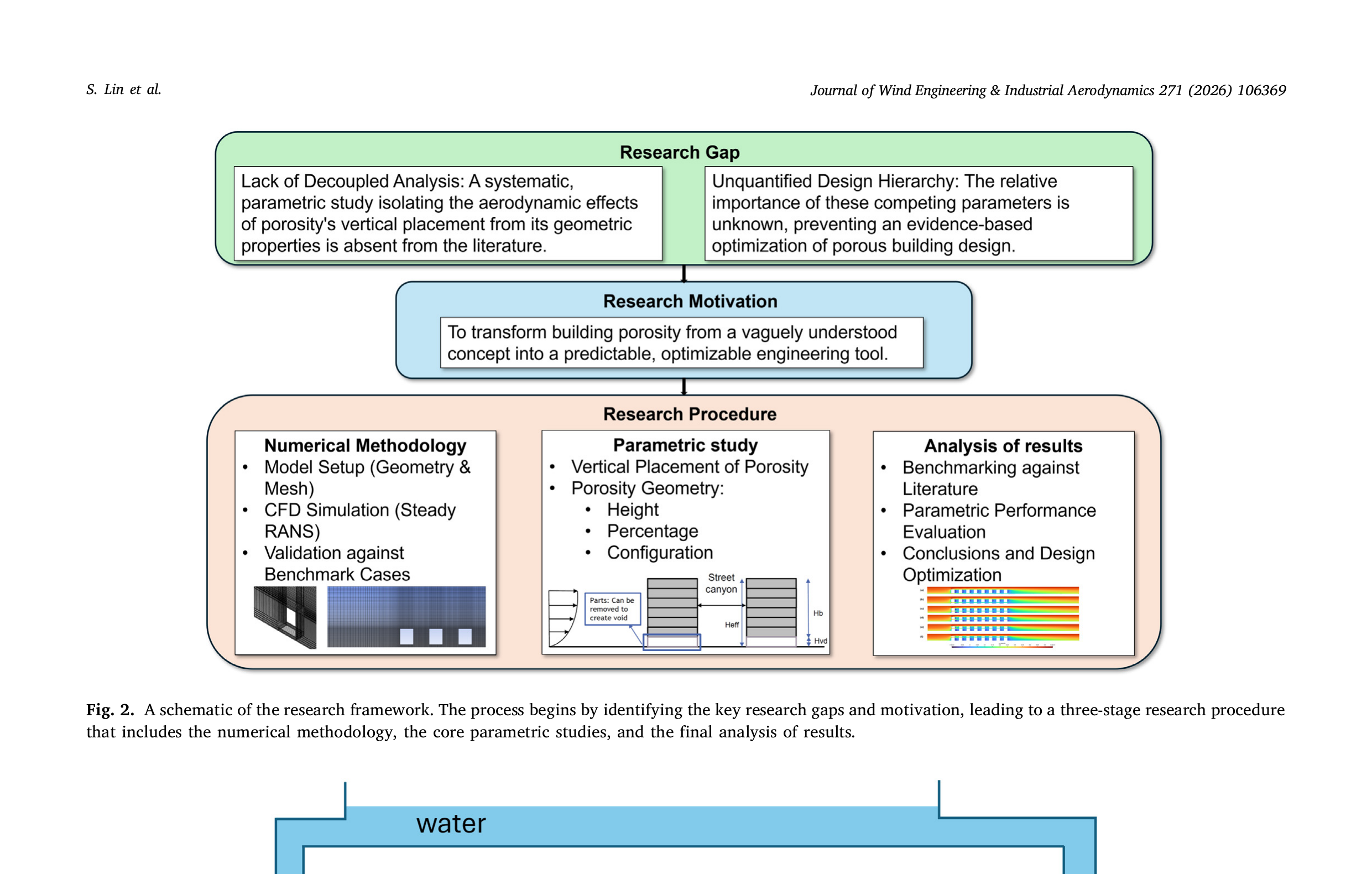 Design trade-offs in building porosity: A parametric analysis of vertical placement and geometry for urban ventilationJournal of Wind Engineering and Industrial Aerodynamics, 2026
A validated RANS parametric study shows that the vertical location of a porous opening matters more than its size: ground-level porosity preserves pedestrian wind, while elevated voids can suppress it.
- Sci. Data
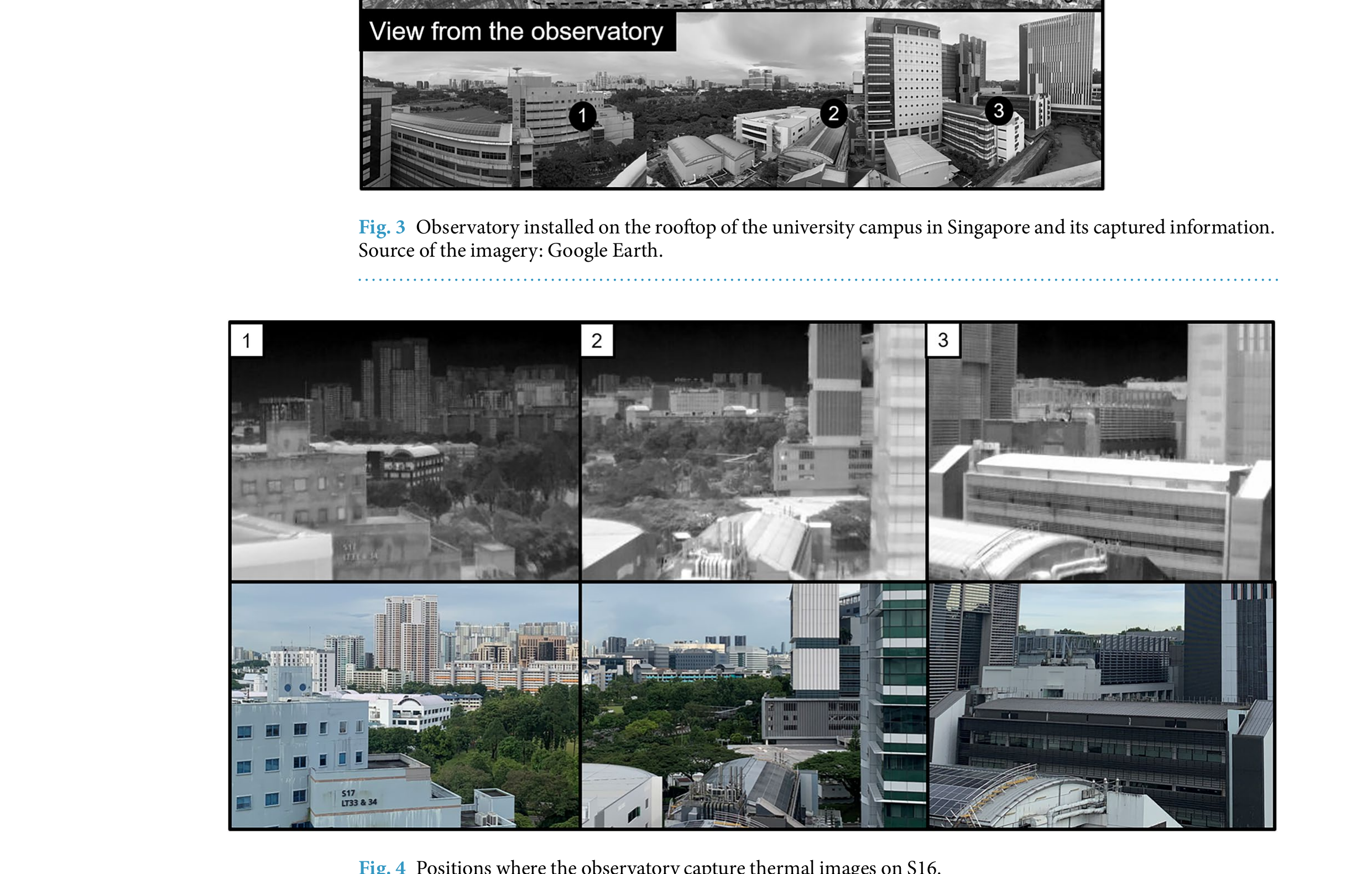 District-scale surface temperatures generated from high-resolution longitudinal thermal infrared imagesScientific Data, 2023
A rooftop infrared observatory in Singapore produced 1.36 million district-scale thermal images, enabling fine-grained study of buildings, roads, and vegetation over time.
- Water Res.
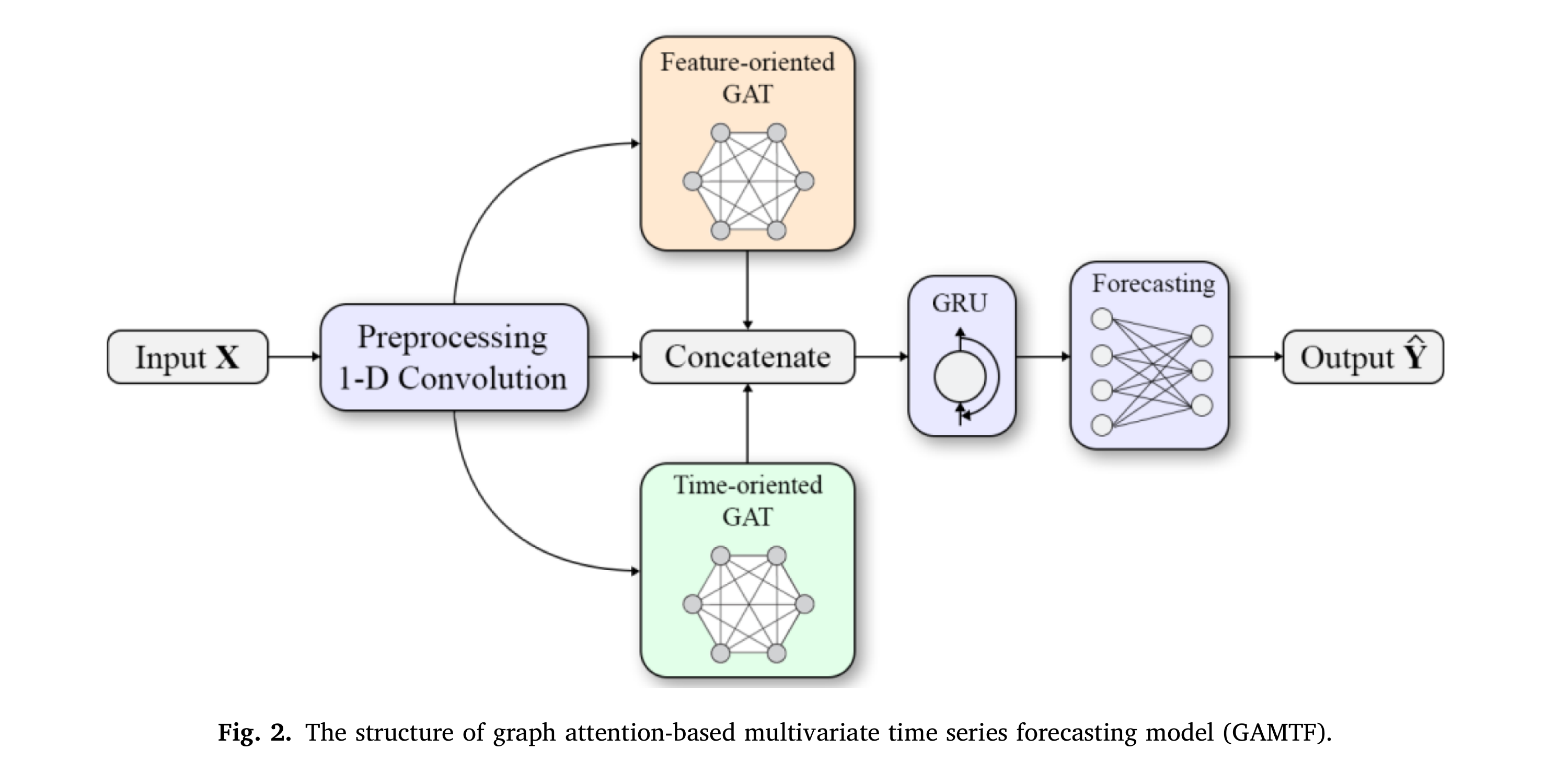 Coagulant dosage determination using deep learning-based graph attention multivariate time series forecasting modelWater Research, 2023
GAMTF combines graph attention with time-series forecasting to jointly predict coagulant dosage and settled-water turbidity from long-term treatment-plant data.
- JWPE
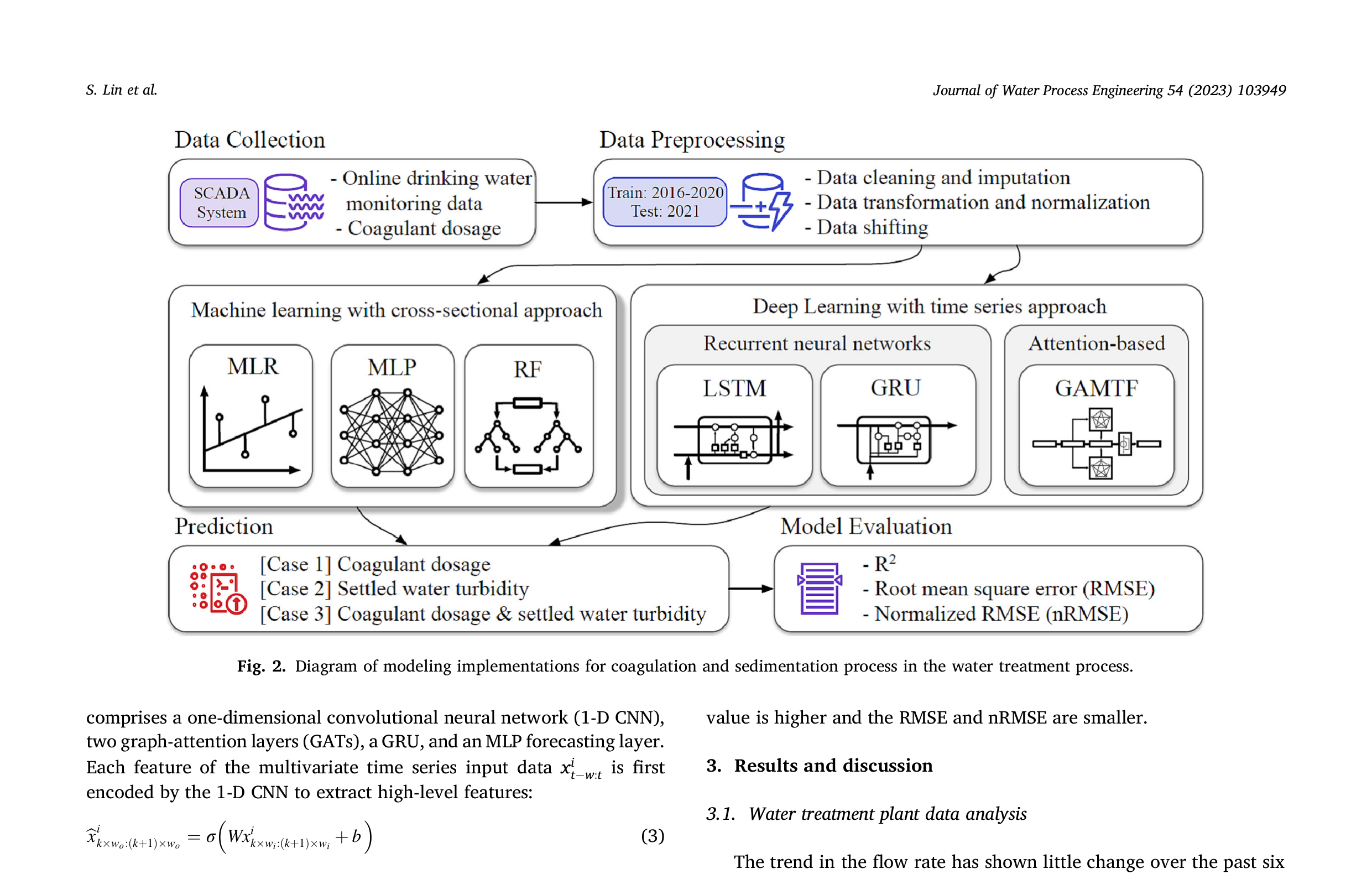 Comparing artificial and deep neural network models for prediction of coagulant amount and settled water turbidity: Lessons learned from big data in water treatment operationsJournal of Water Process Engineering, 2023
Six years of operations data reveal why time-aware deep models improve predictions of both coagulant dosage and turbidity in a changing water-treatment process.
- IAQVEC
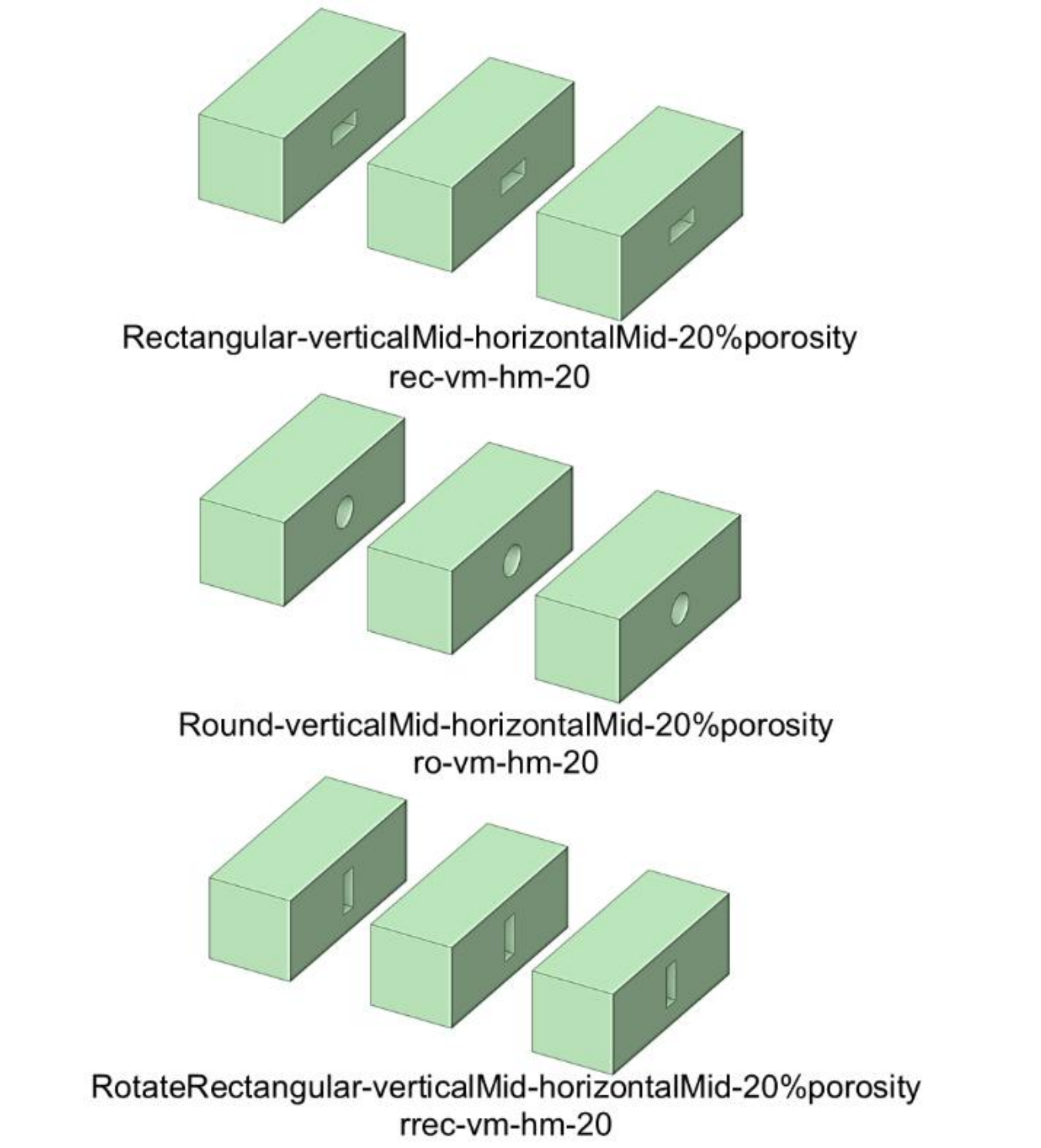 Aerodynamic response and ventilation enhancement in urban street canyons through building porosity: A comparative numerical and experimental studyIn E3S Web of Conferences, 2026
Wind-tunnel measurements and validated RANS simulations compare three void-deck geometries, showing that a slot reaching toward the ground is most effective at flushing the pedestrian zone.